- Deciphered Enigma
- Posts
- Comprehensive Guide to Blockchain DEX Exchange Smart Contracts: Swaps, Staking, Lending & Security
Comprehensive Guide to Blockchain DEX Exchange Smart Contracts: Swaps, Staking, Lending & Security
Part 1

Quantum Professor
August 13, 2024

DEX Overview
The rise of Decentralized Exchanges (DEXs) has transformed the cryptocurrency landscape, enabling users to trade assets without intermediaries. At the heart of these DEXs are smart contracts, the self-executing contracts with the terms of the agreement directly written into code. This comprehensive guide delves into the core functionality of multichain DEX exchanges—exploring how smart contracts facilitate swaps, staking, lending, slippage control, and security measures. Along the way, we will provide Solidity code snippets for each of these functionalities, complete with detailed explanations.
Understanding Smart Contracts in DEX Exchanges
Smart contracts are the backbone of DEX exchanges. They automate the trading process, ensuring that transactions are executed exactly as programmed without any risk of manipulation or downtime. The decentralized nature of DEXs means that these contracts must be meticulously coded to handle various operations securely and efficiently.
Core Functions of DEX Smart Contracts
Swaps
Staking
Lending
Slippage Control
Security
Each of these functionalities is critical to the operation of a DEX, ensuring that users can trade, stake, and lend assets in a secure, decentralized environment.
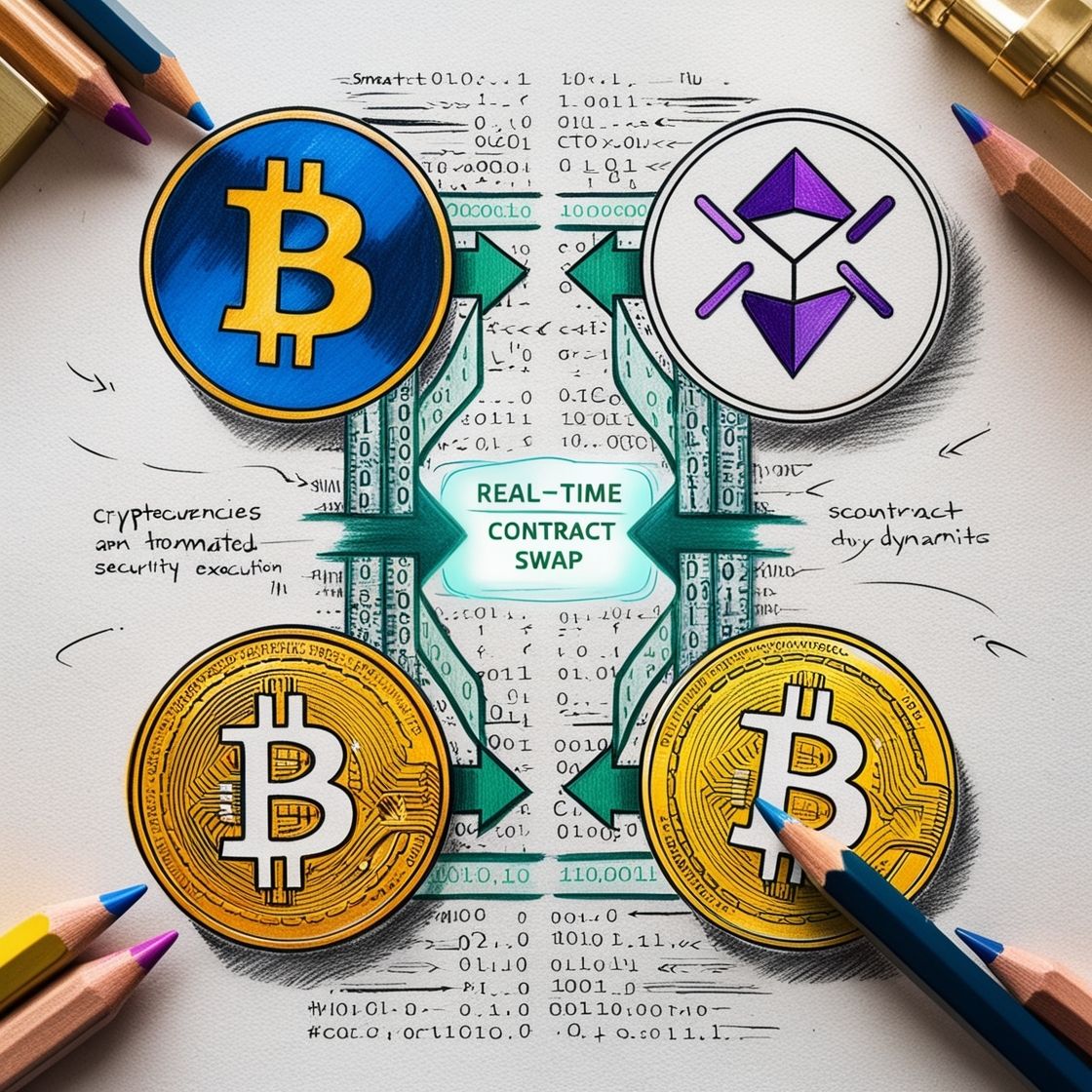
Realtime Swap
Swaps in DEX Exchanges
What is a Swap?
A swap in a DEX refers to the exchange of one cryptocurrency for another. Swaps are one of the most fundamental features of DEXs, enabling users to trade tokens directly from their wallets without the need for a central authority.
Solidity Code Snippet for a Swap Function
pragma solidity ^0.8.0;

interface IPriceOracle {
    function getPrice(address tokenIn, address tokenOut) external view returns (uint256);
}

contract DEXSwap {
    event Swap(
        address indexed user,
        address indexed tokenIn,
        address indexed tokenOut,
        uint256 amountIn,
        uint256 amountOut
    );

    IPriceOracle public priceOracle;

    constructor(IPriceOracle _priceOracle) {
        priceOracle = _priceOracle;
    }

    function swap(
        address tokenIn,
        address tokenOut,
        uint256 amountIn,
        uint256 amountOutMin,
        address to
    ) external {
        require(IERC20(tokenIn).transferFrom(msg.sender, address(this), amountIn), "Transfer of tokenIn failed");

        uint256 amountOut = getAmountOut(tokenIn, tokenOut, amountIn);
        require(amountOut >= amountOutMin, "Insufficient output amount");

        require(IERC20(tokenOut).transfer(to, amountOut), "Transfer of tokenOut failed");

        emit Swap(msg.sender, tokenIn, tokenOut, amountIn, amountOut);
    }

    function getAmountOut(
        address tokenIn,
        address tokenOut,
        uint256 amountIn
    ) internal view returns (uint256) {
        uint256 price = priceOracle.getPrice(tokenIn, tokenOut);

        uint256 amountOut = (amountIn * price) / (10 ** 18);

        return amountOut;
    }
}
Code Explanation
pragma solidity ^0.8.0;Specifies the Solidity compiler version this contract is compatible with. In this case, the code requires version 0.8.0 or higher.
interface IPriceOracle { function getPrice(address tokenIn, address tokenOut) external view returns (uint256); }Defines an interface for the
IPriceOraclecontract. This interface contains agetPricefunction that returns the price oftokenOutin terms oftokenIn. The function is marked asexternal view, meaning it can be called from outside the contract and does not modify the blockchain state.
contract DEXSwap {Declares the start of the
DEXSwapsmart contract.
event Swap(address indexed user, address indexed tokenIn, address indexed tokenOut, uint256 amountIn, uint256 amountOut);Defines an event named
Swap. Events in Solidity allow contracts to log data on the blockchain, which can later be accessed by off-chain applications. Theindexedkeyword allows for filtering logs by these parameters.
IPriceOracle public priceOracle;Declares a public state variable
priceOracleof typeIPriceOracle. This will store the address of the price oracle contract, allowing theDEXSwapcontract to interact with it.
constructor(IPriceOracle _priceOracle) { priceOracle = _priceOracle; }Defines the constructor for the
DEXSwapcontract, which is executed only once when the contract is deployed. It initializes thepriceOraclestate variable with the address provided as_priceOracle.
function swap(address tokenIn, address tokenOut, uint256 amountIn, uint256 amountOutMin, address to) external {Declares the
swapfunction, which handles the token swapping logic. The function is markedexternal, meaning it can be called from outside the contract.
require(IERC20(tokenIn).transferFrom(msg.sender, address(this), amountIn), "Transfer of tokenIn failed");Transfers
amountInoftokenInfrom the user's address (msg.sender) to the contract's address. It uses thetransferFromfunction of theIERC20token standard. If the transfer fails, the transaction is reverted with the message "Transfer of tokenIn failed".
uint256 amountOut = getAmountOut(tokenIn, tokenOut, amountIn);Calls the internal
getAmountOutfunction to calculate how muchtokenOutthe user should receive based on the input amount oftokenIn.
require(amountOut >= amountOutMin, "Insufficient output amount");Checks that the calculated
amountOutis at least as large asamountOutMin, which is the minimum amount oftokenOutthe user is willing to accept. If this condition is not met, the transaction is reverted with the message "Insufficient output amount".
require(IERC20(tokenOut).transfer(to, amountOut), "Transfer of tokenOut failed");Transfers
amountOutoftokenOutfrom the contract to the recipient's address (to). If the transfer fails, the transaction is reverted with the message "Transfer of tokenOut failed".
emit Swap(msg.sender, tokenIn, tokenOut, amountIn, amountOut);Emits the
Swapevent, logging the details of the swap, including the user address, input token, output token, and the respective amounts.
function getAmountOut(address tokenIn, address tokenOut, uint256 amountIn) internal view returns (uint256) {Declares the internal
getAmountOutfunction, which calculates the output amount oftokenOutbased on the input amount oftokenIn. The function is markedinternal view, meaning it can only be called within the contract and does not modify the blockchain state.
uint256 price = priceOracle.getPrice(tokenIn, tokenOut);Fetches the current exchange rate between
tokenInandtokenOutfrom thepriceOracle. The result is stored in thepricevariable.
uint256 amountOut = (amountIn * price) / (10 ** 18);Calculates the amount of
tokenOutthe user should receive. It multiplies the input amount (amountIn) by the price and divides by10 ** 18to account for the price's decimal precision (assuming the price is returned with 18 decimals).
return amountOut;Returns the calculated output amount of
tokenOut.
Staking in DEX Exchanges
What is Staking?
Staking allows users to lock up their tokens in a DEX to earn rewards, typically in the form of more tokens. It's a mechanism that incentivizes liquidity provision and network security.
Staking
Solidity Code Snippet for a Staking Contract
pragma solidity ^0.8.0;

contract DEXStaking {
    IERC20 public stakingToken;
    IERC20 public rewardToken;
    uint256 public rewardRate = 100; // Example reward rate
    mapping(address => uint256) public balances;
    mapping(address => uint256) public rewardDebt;
    mapping(address => uint256) public lastUpdateTime;

    constructor(IERC20 _stakingToken, IERC20 _rewardToken) {
        stakingToken = _stakingToken;
        rewardToken = _rewardToken;
    }

    function stake(uint256 _amount) external {
        require(_amount > 0, "Cannot stake 0");
        updateRewards(msg.sender);
        stakingToken.transferFrom(msg.sender, address(this), _amount);
        balances[msg.sender] += _amount;
    }

    function withdraw(uint256 _amount) external {
        require(_amount > 0, "Cannot withdraw 0");
        require(balances[msg.sender] >= _amount, "Insufficient balance");
        updateRewards(msg.sender);
        stakingToken.transfer(msg.sender, _amount);
        balances[msg.sender] -= _amount;
    }

    function claimRewards() external {
        updateRewards(msg.sender);
        uint256 reward = rewardDebt[msg.sender];
        require(reward > 0, "No rewards to claim");
        rewardDebt[msg.sender] = 0;
        rewardToken.transfer(msg.sender, reward);
    }

    function updateRewards(address _user) internal {
        if (balances[_user] > 0) {
            uint256 timeDifference = block.timestamp - lastUpdateTime[_user];
            uint256 reward = balances[_user] * rewardRate * timeDifference / 1e18;
            rewardDebt[_user] += reward;
        }
        lastUpdateTime[_user] = block.timestamp;
    }
}
Code Explanation
pragma solidity ^0.8.0;Specifies the version of Solidity that this contract is compatible with. Version
0.8.0or higher is required.
contract DEXStaking {Declares the beginning of the
DEXStakingcontract.
IERC20 public stakingToken;Declares a public state variable
stakingTokenof typeIERC20, representing the token that users will stake.
IERC20 public rewardToken;Declares a public state variable
rewardTokenof typeIERC20, representing the token that will be distributed as rewards.
uint256 public rewardRate = 100; // Example reward rateDeclares a public state variable
rewardRatethat defines the rate at which rewards are accumulated. The value100is an example rate.
mapping(address => uint256) public balances;Declares a mapping
balancesthat tracks the amount ofstakingTokeneach user has staked. The key is the user's address, and the value is the staked amount.
mapping(address => uint256) public rewardDebt;Declares a mapping
rewardDebtthat tracks the accumulated rewards for each user. The key is the user's address, and the value is the amount of rewards owed to them.
mapping(address => uint256) public lastUpdateTime;Declares a mapping
lastUpdateTimethat records the last time a user's rewards were updated. The key is the user's address, and the value is the timestamp of the last update.
constructor(IERC20 _stakingToken, IERC20 _rewardToken) { stakingToken = _stakingToken; rewardToken = _rewardToken; }Defines the constructor for the
DEXStakingcontract. It initializes thestakingTokenandrewardTokenwith the respective token addresses provided as arguments (_stakingToken,_rewardToken).
function stake(uint256 _amount) external {Declares a public function
stakethat allows users to stake a specified amount ofstakingToken. The function is markedexternal, meaning it can be called from outside the contract.
require(_amount > 0, "Cannot stake 0");Ensures that the amount to be staked is greater than 0. If the condition is not met, the transaction is reverted with the message "Cannot stake 0".
updateRewards(msg.sender);Calls the
updateRewardsfunction to update the user's rewards based on the current time and their staked balance.
stakingToken.transferFrom(msg.sender, address(this), _amount);Transfers the staked amount (
_amount) ofstakingTokenfrom the user's address (msg.sender) to the contract's address. This requires the user to have approved the contract to spend their tokens.
balances[msg.sender] += _amount;Increases the user's staked balance by the staked amount.
function withdraw(uint256 _amount) external {Declares a public function
withdrawthat allows users to withdraw a specified amount of their staked tokens. The function is markedexternal, meaning it can be called from outside the contract.
require(_amount > 0, "Cannot withdraw 0");Ensures that the withdrawal amount is greater than 0. If the condition is not met, the transaction is reverted with the message "Cannot withdraw 0".
require(balances[msg.sender] >= _amount, "Insufficient balance");Ensures that the user has enough staked balance to withdraw the specified amount. If the condition is not met, the transaction is reverted with the message "Insufficient balance".
updateRewards(msg.sender);Calls the
updateRewardsfunction to update the user's rewards before adjusting their balance.
stakingToken.transfer(msg.sender, _amount);Transfers the specified amount of
stakingTokenfrom the contract's address back to the user's address.
balances[msg.sender] -= _amount;Decreases the user's staked balance by the withdrawn amount.
function claimRewards() external {Declares a public function
claimRewardsthat allows users to claim their accumulated rewards. The function is markedexternal, meaning it can be called from outside the contract.
updateRewards(msg.sender);Calls the
updateRewardsfunction to ensure the user's rewards are up-to-date before they claim them.
uint256 reward = rewardDebt[msg.sender];Retrieves the amount of rewards owed to the user from the
rewardDebtmapping.
require(reward > 0, "No rewards to claim");Ensures that there are rewards available to claim. If no rewards are available, the transaction is reverted with the message "No rewards to claim".
rewardDebt[msg.sender] = 0;Resets the user's
rewardDebtto 0 after they claim their rewards.
rewardToken.transfer(msg.sender, reward);Transfers the reward amount from the contract's address to the user's address.
function updateRewards(address _user) internal {Declares an internal function
updateRewardsthat calculates and updates the user's accumulated rewards. The function is markedinternal, meaning it can only be called from within the contract.
if (balances[_user] > 0) {Checks if the user has a staked balance. If so, the function proceeds to calculate the rewards.
uint256 timeDifference = block.timestamp - lastUpdateTime[_user];Calculates the time difference between the current timestamp and the last time the user's rewards were updated.
uint256 reward = balances[_user] * rewardRate * timeDifference / 1e18;Calculates the reward based on the user's staked balance, the reward rate, and the time difference. The division by
1e18is to maintain precision, assuming the reward rate is expressed with 18 decimals.
rewardDebt[_user] += reward;Updates the user's
rewardDebtby adding the newly calculated rewards to their existing rewards.
lastUpdateTime[_user] = block.timestamp;Updates the
lastUpdateTimemapping to the current timestamp, marking the latest time the user's rewards were updated.
In the next section, we will explore Lending, Slippage Control, and Security features in detail. I encourage you to familiarize yourself with the functions we've covered so far, and stay tuned for more valuable insights in the upcoming part.
|

|

|

Reply